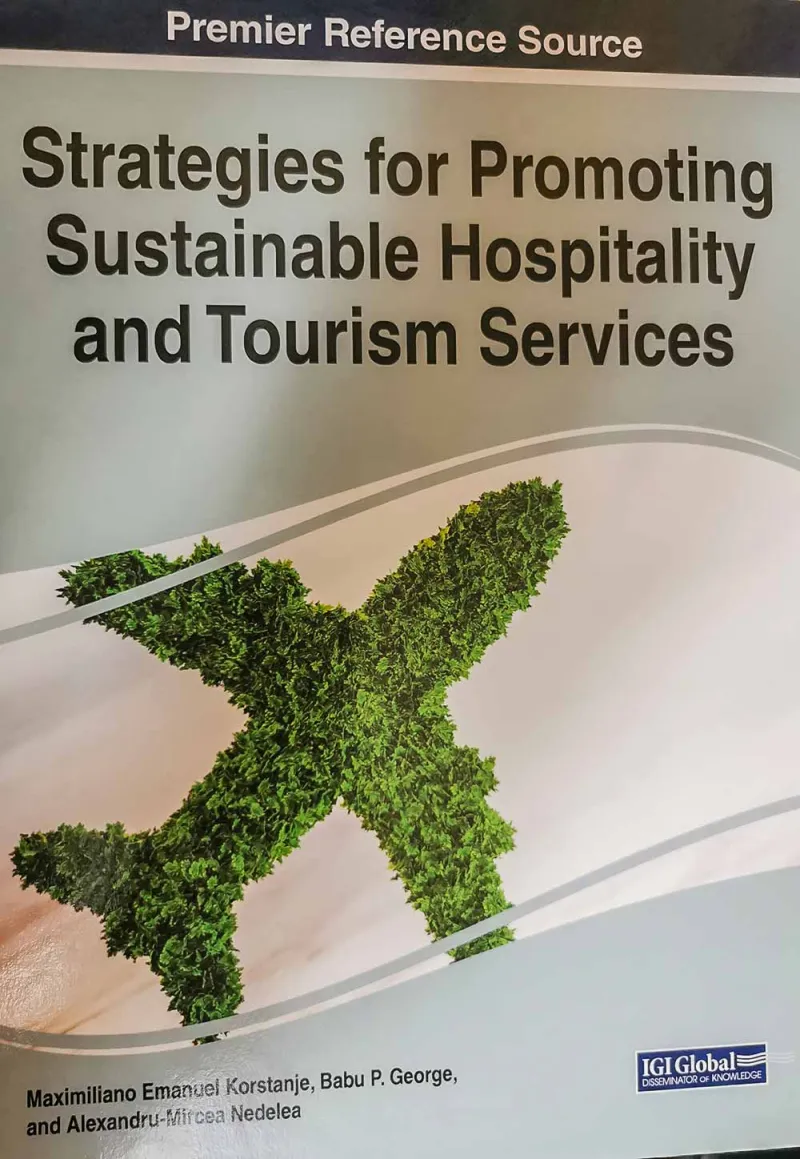
Strategies for Promoting
Sună-ne și spune-ne titlul care te interesează.
Cuprins
Detailed Table of Contents
Foreword
Preface
Acknowledgment
Chapter 1
Tourism, Terrorism, Morality, and Marketing: A Study of the Role of Reciprocity in Tourism Marketing
Peter E. Tarlow, Texas A&M University, USA
This chapter not only explores the dilemmas of tourism security and safety in these difficult days but reflects the author’s own experience in the field. In 2015, when he first wrote this chapter, the number one issue in tourism security was how to handle terrorism’s multiple forms. Terrorism had gone through several mutations since the 1960s. The terrorism of 2015 was very different from that of September 11th, 2001 and in reality even more different from the acts of terrorism against the tourism industry that had begun in the 1960s. Tourism continued to suffer from acts of terrorism that had occurred throughout the world. Although each act of terrorism hurt the industry, massive damage on the macroscale had not occurred in the nine years from 2001-2015, or in the years prior to 2001. In 2020, Covid-19 has destroyed thousands of lives, and in tsunami fashion, it has economically swept away everything that came before it. In Europe the virus wiped out tourism in such major tourism nations as France, Italy, Spain, and the United Kingdom.
Chapter 2
Airbnb as a Tourism Supply Chain Champion for Small Businesses: The Case of South Africa
Unathi Sonwabile Henama, Department of Tourism Management, Tshwane University of Technology, South Africa; Lwazi Apleni, Department of Recreation and Tourism, University of Zululand, South Africa
Airbnb is viewed as an advocate of small micro medium enterprises (SMMEs) in order to boost their revenue. Furthermore, in 2016, Airbnb released a report stating that its community generated R2.4 billion in economic activity in SA, which is the estimated sum of guest spending and host income. It is important to elucidate that SA’s tourism fraternity has been amongst the best performing sectors amid the challenges it is faced with. The sharing economy concept requires all tourism stakeholders to work together (public-private partnership) in order to see its fruition. The sharing economy represents the power of the collaborative consumption and become a means to create an additional value chain for the tourism industry by decreasing the barriers of entry. The Airbnb Africa Academy is a pro-poor skills development and support initiative that was piloted in South Africa, and it has increased access and the success of hosts on the Airbnb platform.
Chapter 3
Heritage Consumption in the Neo-Liberal Agenda: El Abasto, Almagro, Buenos Aires, a Study-Case
Maximiliano Emanuel Korstanje, University of Palermo, Argentina
Buenos Aires city in the days post convertibility crisis appealed to the adoption of tourism as a fresh economic alternative to struggle against poverty and the financial crises. The currency exchange, as well as the abandonment of the convertibility system, favoured Argentina in many ways. For example, Buenos Aires was selected by neighbouring countries as a main tourist destination. This chapter reviews the effects of tourism in the urban landscape, such as real estate speculation, gentrification process, only to name few. The authors stress the role played by urban heritage in the process of touristification—as some voices adhere—which is conducive to the transformation of old industrial neighbourhoods.
Chapter 4
Destination Attributes and Tourist Satisfaction in Jaipur as a Culture Tourism Destination
Lakhvinder Singh, Government College, Kurukshetra University, Kaithal, India
The chapter is an attempt towards measurement of tourist satisfaction towards different selected
destination attributes from responses of four hundred randomly collected sample data through a
structured questionnaire. The collected data were analyzed with the help of suitable statistical tools. The resul of the chapter identified different attributes of the destination and classified them into satisfying, neutral, and dissatisfying attributes. The chapter also provides an overview of overall satisfaction of the tourists as well as discovers the important factors of destination attributes. The findings conclude some recommendations and suggestions to develop strategies to increase tourist arrival to ensure repeat visit.
Chapter 5
Problems of Monetary Rewards in Tourist Organizations: Rent-A-Car Sectors in Buenos Aires, Argentina
Maximiliano Emanuel Korstanje, University of Palermo, Argentina
Over years, management and marketing have been influential and useful to organize the working condition in modern corporations in tourism fields. The classical literature suggests that motivated workers enhance their commitment to the goal of the corporation. In this process, the assistance of managers is vital to achieve the success. In doing so, the program of incentive (monetary awards) gives to workers a reason to internalize management decisions. This not only is not truth, but also, we have found in this casestudy opposite evidence. The capital somehow disorganizes the human relations and harmony in service organizations. Of course outcomes of this review should not be extrapolated to other unit of analysis; this is valid only for this organization.
Chapter 6
Regional Food as the Catalyst for Cultural Tourism in India
Priya Singh, Jamia Millia Islamia, India; Ashaq Hussain Najar, Central University of Kashmir, India
Culture is playing an increasingly important role in tourism, and food is one of the key elements of culture. Tourists enjoy indigenous food, particularly items of local or ethnic nature. Furthermore, knowledge of the local, regional, and national cuisine has become an interest for tourists. The concept of consuminglocal food or drink is considered first-hand cultural experience, and it is on top of the tourist attraction list. In India, the promotion of food as a component of its destination attractiveness is in the budding phase. The context of this contribution is to underpin such linkages between tourism and food that can add to the cultural value of the destinations. The present empirical research is aimed to explore the role of food, culture, and tourism in sustaining the tourism of India. The current study will also attempt to address the role of regional food in promoting the cultural tourism of a particular destination. Further, the study will explore how the local food helps the tourist to recall the cultural heritage of a tourist’s destination.
Chapter 7
Revenue Management in Portugal: A Strategy to Compete
Marine Ferreira, Polytechnic Institute of Porto, Portugal; Teresa Dieguez, Polytechnic Institute of Cávado and Ave, Portugal
The world is constantly changing, and the hotel industry is one of the sectors where we can feel it the most. Nowadays, the hotel market is dynamic, diverse, difficult, and dangerous, which creates new challenges for hotel managers, particularly in terms of revenue, creation, and optimization. In order to overcome that, revenue management emerges as a crucial price management tool to face competitiveness and business growth. This study aims to analyze the practices and advantages of revenue management, as well as understand if its implementation in Portugal influenced the revenue and growth of the hotel industry. It also intends to analyze whether there is adequate revenue training or if further training should be required. A quantitative methodology was used, and 284 answers were collected. From those answers, 115 were validated, analyzed, and discussed. Conclusions were made, and finally some limitations were presented as well as suggestion for future research.
Chapter 8
The Engineering of Territorial Tourism Study Case of Algeria
Mohammed El Amine Abdelli, University of Zaragoza, Spain; Nadia Mansour, University of Sousse, Tunisia; Smaili Nabila, University of Tizi-Ouzou, Algeria
Tourism is a vital sector that presents one of the ways of economic diversification of a country. It has become a major economic activity that plays an important role in bringing people, countries, and regions together. In addition, it is an area promoted as a strategic sector since it provides a high percentage of foreign exchange earnings and represents a major share of GDP. Also, it provides a large number of jobs, especially for the most vulnerable groups in the society, including women, young people, and the low-skilled. Boosting this sector would result in remedying the inadequacy of the budgets allocated to the sector to allow maximum investments and to improve the business climate.
Chapter 9
A Futuristic Approach to Sustainable Tourism Development: Lessons From Kandovan Village
Hamed Rezapouraghdam, Bahçeșehir Cyprus University, Cyprus; Habib Alipour, Eastern Mediterranean University, Turkey; Arash Akhshik, Eastern Mediterranean University, Turkey
In spite of the enormous efforts and implementation of the masterplans for the development of rural areas in Iran, the majority face economic, social, and ecological challenges that jeopardize their future, particularly where tourism has been prescribed as a panacea. Among those, Kandovan, known as the only inhabited rocky village in the world that attracts half a million visitors, annually entails excessive consideration and as a case embraces imperative contributions to the sustainability-future research domain. This study aims to contribute to an enhanced understanding of the nexus between “sustainable development” and the “future” in tourist destinations. Through the analysis of the secondary data, this study takes a scenario-planning approach and discusses the current social, environmental, and economic themes: the foundation of four potential future scenarios. The underpinned framework in the context of Kandovan offers noteworthy implications both in theory and practice of tourism by proposing an areabased planning model according to the emerged alternative scenario.
Chapter 10
Monginis: A Unique Innovation in the Franchise Model
Christo Fernandes, Independent Researcher, India; Babu George, Fort Hays State University, USA; Ajit Mishra, Independent Researcher, India
Monginis was started in 1970 at Chembur, Mumbai, India, with just one store. The franchise model
that it pioneered in the industry embraced some real-time practices of human development that were carefully captured through the recruitment strategy, job engagement, training, positive work environment, along with strategic practice of embracing local taste in product that has summoned success. How will Monginis reach out to every Indian? While the franchise model has led to expansion and groth, the company does not wish to sit idly on past laurels, but how should it move ahead? This is an updated case study that touches upon two additional dimensions: 1) getting children to bake a cake program and 2) training intervention and buddy support to the franchisee team.
Chapter 11 Modeling Destination Competitiveness: The Unfamiliar Shift for Destination Rebranding,
Restructuring, and Repositioning With DMOs
Bindi Varghese, Christ University, India; Shazin Aboobacker, Christ University, India
Tourism is a tactical economic practice across the globe, but the urban and provincial transformations in the industry are strongly contemplated in the light of an unfamiliar shift in tourism business. This chapter discusses an integrated concept with a framework relating systematic approach of managing the destination and its competitiveness. An investigation on the impact on tourism and the recent narrative of national, regional, and local planning approach directs towards efficient destination management organizations (DMO) in practice for future development. This has proceeded by the formation of a competitive approach, emphasizing on the DMO roles and responsibilities helpful for a destination management during an unfamiliar business trend. Modeling destination competitiveness demands an absolute mechanism through destination rebranding, restructuring, and repositioning with DMOs for enabling competency.
Chapter 12
Visitor Perception and Expectation of Heritage Tourism at Mahabalipuram Monuments
Bindu V. T. Nair, Avinashilingam Institue for HomeScience and Higher Education for; Women, Coimbatore, India; Sathiyabamavathy K., Avinashilingam Institute of Home Science and Higher Education for; Women, Coimbatore, India
This chapter explores visitor perception and expectation of heritage tourism at Mahabalipuram group of monuments. Visitor opinions were collected in the form of constructed questionnaire to study the perception and expectation of Mahabalipuram as the visitors can act as ambassadors for heritage tourism development. The research objectives of this study were therefore to assess tourists’ motives for visiting Mahabalipuram, their expectation of the heritage destination, and their perception after visiting the monument. The competitiveness as a destination and the gap between tourists’ perceptions and expectations were assessed in the current study. The present study discloses the gap of visitor expectations and their perceived feelings of the heritage destination. Visitor perception on the major 5A’s were assessed in this study, which pave the way for better positioning and planning of the destination.
Compilation of References
About the Contributors
Index